Saturday, July 30, 2011

HUMMINGBIRD RECOVERY


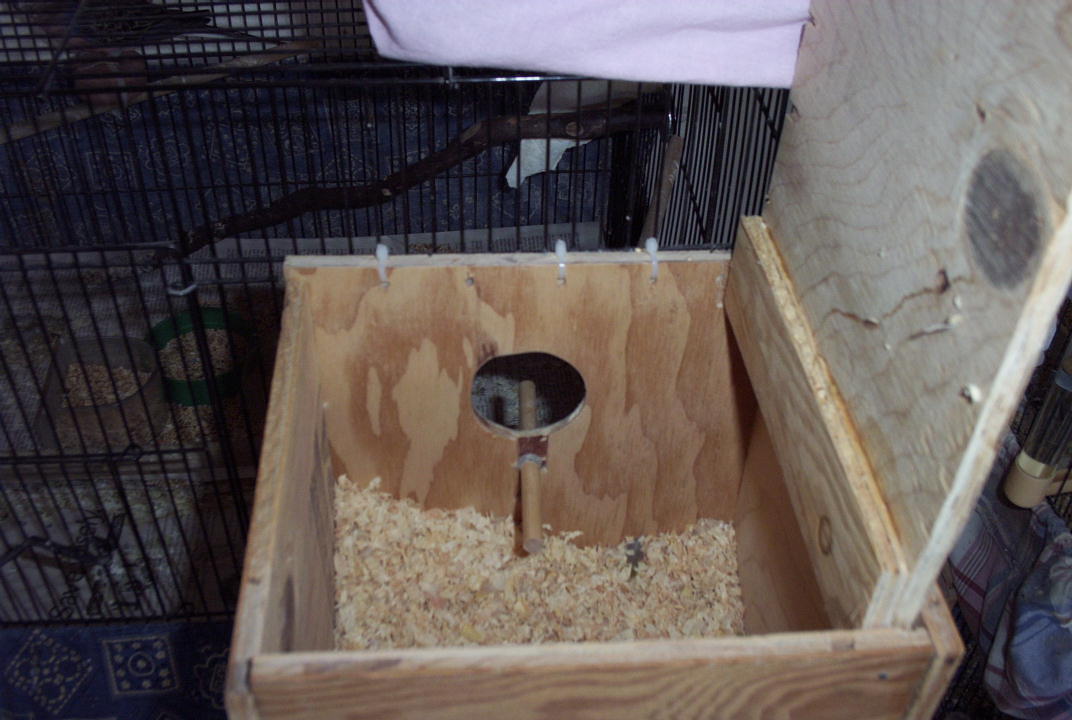
The hummingbird hen is doing well. She now lands on a perch...not the one in this photo. She feeds at the flowers and from the sugar water. She doesn't "spin" in the air like she did two days ago. We are going to hold her until Monday and then probably release her in the morning. She is still favoring her left leg and we want to give her another day or two to gain strength.  She's a sweet little thing.

Peace & Blessings.

Thursday, July 28, 2011

HUMMER HEN

Our injured hummingbird hen is flying better. Maybe a few more days and she can safely be released. She's able to hover without going in circles and flies up to the fresh fuchsia flowers put in a vase in her cage. As of yesterday, she wasn't doing that. She still prefers the dish of sugar water, but we lifted it up off the floor for her and she seems to like flying to it now. One leg still seems a little weak, but she's stronger than she's been in the past and now flies to a perch. Hurray!

We have visitors this week and next, so blogging time is limited. Hope your summer days are pleasant wherever you are. Ours are lovely.

Blessings to you and yours.

Monday, July 25, 2011

HUMMINGBIRD UPDATE #4...

I tried to release the little hummer hen this morning. Days ago she couldn't fly at all. Now she hovers in the cage pretty well.

Took her to the hummingbird feeder on our west deck and placed her on it. She flew across the deck about 20 feet, awkwardly bumped into the deck handrail before making it over the top. She glided down to the grass below, then lifted off and flew about 12 feet landing in tall grass at the edge of the mowed area. Any farther and she'd have been over an embankment and in forest where I couldn't rescue her.  

Another hummer followed her in her flight off the deck.  A mate, maybe? It hovered over her, while in the tall grass she struggled to fly, but couldn't get airborne again. Sad. I went down the steps and retrieved her. Back in her cage, I put her down in front of the bowl of sugar water and she drank and drank. I think she was saying, "Wow, that was a workout!"

She must need more recovery time. I sincerely hope she regains her ability to fly adequately again. She's much better than she was, but apparently not good enough to survive on her own yet.

May all your bird encounters be happy ones! 

Friday, July 22, 2011

PINK-EYED ROSY BOURKES from Rosie & Pretty Boy

The baby at the far left has pink eyes.
Notice the baby by my thumb has dark eyes. A pink-eyed
sibling has a head over his neck and the other on the left also
has pink eyes. Albino? They probably won't be white,
but I'm excited to see what they will look like.
When our tame, handfed Rosy Bourke hen, Rosie, left her nest box this morning, she came to the cage door to let me know she wanted out. That’s the first time she’s been interested in flying free since she laid her first egg, and now her three babies are over a week old.

I opened the cage door and out she came. Later, Pretty Boy followed, and as usual he did some circles around the room and flew right back into his cage. He’s such a homebody. You never have to worry about coaxing him to return to his cage. He’s an easy keeper, smile.
 
 
Since one of Rosie’s babies was nearly ready to band, I lifted them all out of the nest box to check them. I thought she’d be concerned and would fly to them immediately. I wanted a photo of her with the babies, but she visited me only briefly to give me a quick kiss before flying to say hello to all the other birds.

I banded her largest dark-eyed baby while she flitted around unconcerned about her youngsters. In spite of being hand fed herself, she's proving to be an excellent mother.


Happily, her two babies with pink eyes are doing very well. Their feet should be big enough to band in another day or two.
Laying like this, his pink eye is very visible. Eager to see
what he's going to look like as an adult bird.
Rosie’s grandmother never successfully raised her pink-eyed babies, and Rosie’s mother never produced babies with pink eyes. But, since Pretty Boy is a cousin of Rosie’s, they probably both carry that gene.

Aren’t they sweet?  I think so.


Have a wonderful day!

Thursday, July 21, 2011

HUMMER DOING WELL


Photos taken this morning of the little Anna's Hummingbird with an injured wing.

She can climb up the side of the cage with her wings going. Can't seem to fly very high or very far though. An outside trip proved that. We're eager to release her, as we have enough indoor birds to care for, but she's not ready. Pray she will be soon!  ;-)

Peace & Blessings.

Monday, July 18, 2011

HUMMINGBIRD UPDATE

Hi All,
Thanks for the comments on the previous post. It's very useful. I moved the little hummer into a larger cage this afternoon. I wanted to add real fuchsia flowers and they wouldn't fit in the little travel cage. Perhaps she can get pollen from them. We have lots of fuchsia's in bloom right now.

I tried offering a fruit fly and a mosquito, but she ignored them. Possibly because they weren't moving any longer. I didn't want them to fly away... Her sugar water is replaced daily.


She seems stronger today than yesterday. Maybe having more room will be a good thing.

In the photo she is laying down, but I'd just moved her into the new cage and she's still unsure about it. She can pull herself up to the low perches. The red lid holds sugar water and the blue one plain water. I had a water bottle on the small cage, but she never went near it. This seemed like a friendlier option. She still has a water bottle on the other end of the cage, however.  

The small cage sat on my kitchen table and she could see the other hummingbirds through the window. Having her there was a bit inconvenient as we're going to have visitors in a few days, so the larger cage is now in the living room. She can hear and see other birds, just not the hummers...

I might return her to the kitchen if she's still with us after all the company leaves. God willing, however, by then she will be flying free! Smile.

Saturday, July 16, 2011

INJURED HUMMINGBIRD QUESTION

Hello All,

This little hummer was rescued last night from a cat. Her wing is injured and she can't fly without falling to the ground. She is eating the sugar water mixture we gave her: 4 parts water to 1 part sugar, boiled and cooled. An essential red lid provides it. 

Anna's Hummingbird hen with an injured wing.
She was rescued from under the foot of a cat last night.
Any suggestions on helping her recover? I know they also eat small insects. My husband suggested aphids, but we don't have any. I read that fruit flies are a good source of protein for hummers. Now, where did I toss that banana skin?

We do have very small moths and can probably find a mosquito or two for her, especially since our baby Swallows have all left the bird houses and none are staying close to our home any longer. Wish the parents would decide on a second clutch, but that never seems to happen with Swallows like it does with parakeets.

Although we have several varieties of hummingbirds at our feeders right now, I believe this one is an Anna's hummingbird. This variety doesn't migrate and remains in Oregon all year long. That's a positive in her favor if she never flies again and can't leave ... she won't have an urge to migrate.

The bird's coloration is that of a hen or a very young Anna's hummingbird. Males get their irredescent red throats when they mature. Young male birds look like the hens. I hope this bird is actually a youngster and not a hen who left a nest. She doesn't seem to be afraid of us, a possible sign that she's young, or just used to seeing us around the feeders. They will sometimes land on our hands as we carry the cleaned and refilled feeders back outside.

This morning my husband was the first one into the kitchen where the bird slept last night. He came back to tell me that the hummingbird hadn't made it. That she was dead.

"That's odd," I said. "She didn't seem to have any major injuries, just an injured wing."

"Well, she's laying stiff, and her beak is in the sugar water like she drowned in it." He took my hand and we both went back to the kitchen.

The bird was sitting on her perch, looking sedate and comfortable.

If you haven't heard about "torpor" in hummingbirds, you should know about it. When hummingbirds sleep, they go into a hibernation-like state called torpor (pronounced TOR-per). This is a really deep sleep. They may appear dead, but aren't. So, if you find an unresponsive hummingbird, don't toss it in a garbage can! Leave it alone, even if hanging upside down. However, if it's in danger from a cat or something else, you can move it to a safe place and watch it, releasing it when it wakes up.  

We hope this bird will fully recover and can be released. It's illegal in the U.S. to keep a migratory bird, and just because this one doesn't migrate, they might still want to fine us for having it. If she can't recover enough to fly, perhaps there's a bird rescue facility we can locate, or get a permit for her ...? I'll have to look into it. Unless a bird sanctuary takes her, we may have a resident hummingbird for the duration of her life. I've seen videos of tame hummingbirds, but never one that couldn't fly. It's sad and I hope she fully recovers and can be released. If not, I guess I'll have to think of a name for her. Any suggestions?

Peace to you on this lovely Saturday.

Friday, July 15, 2011

ROSIE'S ROSY BOURKE BABIES

Rosie has just returned to her brood. I added millet to her box
when I thought she looked thin. She ate it until the eggs hatched.
Now she relies only on her mate for food. Possibly because the
twice regurgitated food is richer and finer for her youngsters.
Our handfed Rosy Bourke hen, dubbed Rosie, hatched all three of her eggs. Two of the babies are a surprise. They have pink eyes.

Rosie, and her mate, Pretty Boy, are first cousins. Her father and his mother are siblings. Their mothers have never produced babies with pink eyes. But, their shared grandmother, Cherry, produced a baby with pink eyes one year. It only survived for a week. 

Three huddled together for warmth. Hatched
Sunday, Tuesday and Thursday. Photo taken
on Friday.
For Rosie to produce two pink-eyed babies in her very first clutch was unexpected. I hope they're healthy and will continue to grow. I once owned a pair of white faced Bourkes with pink eyes. I'd no idea how old they were and the hen died about six months after their purchase. I traded the male for a Splendid parakeet, and he did later reproduce for his new owner.I don't think any of his offspring had pink eyes, however.

As discussed in an earlier post about that first pink-eyed baby, it also had a very dark stomach, indicative of an internal organ problem. These are so newly hatched, and Rosie is so protective, that I've not examined them closely enough to determine if they do too. I'm optimistic that they are okay.

Look closely at baby in my hand. Egg tooth is touching
my finger. Eyes are still closed and both slightly bulge
outward on both sides of head. See that they are pink. No
dark coloration. Compare them to photo below.

The largest, and first baby hatched, has dark eyes. His head is at far left with one dark eye visible. Crop is full. The other two babies' eyes are harder to find in photo because they're pink, lacking the melanin of their sibling. The one in the middle is actually facing us and his head forms a "v" toward us. Both eyes are visible at each side of his head.

Peace & Blessings.

Tuesday, July 12, 2011

Rosy Bourke Hens and Black Spots

On Jul 6, 2011  Thomas wrote: "Why do my female rosie bourkes have black spots all over their backs?"

Here's my response:  

Female Rosy Bourkes are usually darker than the males, especially their faces. However, there is a wide variation of color possible in Rosies since all of them are descended from Normal Bourkes (the wild color in Australia). If your birds are receiving adequate nutrition, the dark spots are not unusual. My hens aren't completely pink on their backs either. The dark edges on some of their feathers may not show up in the photos, but they're there. The males are less likely to have this, but can.

A young bird of a different color. See comment attached to
this blog for information on pied colors, different than this one.
Occasionally, we will get a baby that isn't truly pink or rosie. They can be "pied" and I've also heard people refer to "rainbow" Bourkes. Here is one of ours.
  

It's unlikely the dark color on your hens is caused by a deficiency, but all birds can show feather damage if they suffer an illness or go through a period of time where they receive inadequate food. Starving birds don't produce healthy feathers. I discussed stress bars on feathers in an earlier article. Here's a link to it. 


Rosy hens are likely to have darker areas on their backs, and it's not at all unusual. One of my hens suffered egg binding and lost feathers due to a treatment with mineral oil that saved her life. The feathers came back very dark. A few months later, after another molt,  they were pink again. Here is a link to that post.  
After losing feathers damaged by mineral oil, they grew back
in dark. This is Sugar about a year ago.


This is Sugar after molting off the darker feathers.
They came back in as they were before being damaged
and then regrowing in darker.

 These are before and after photos of Sugar, who suffered egg binding and survived.

Currently, she's on eggs again without any problems. Trust me ... this REALLY IS the same bird.

Peace & Blessings,

Sunday, July 10, 2011

A Compliment and More on Raising Bourkes


Rhett & Cherry's babies on 7-10-2011.
I must share this wonderful comment from "Inkophile" with my other readers. It made my day and put a big grin on my face! She or he said:

"Your birds are gorgeous and charm me every time I read about them. In addition your writing inspires me to do the best for my birds. I hope downsizing won't have a negative impact on the frequency of your posts. I really look forward to them."

Thank you, thank you!

Actually, the frequency of my posts has lessened because I'm working hard to finish editing a new suspense novel, "Cast Me Not Away."  Cape Arago Press is willing to publish it, and if I go with them it will be out sooner than if I seek an agent and allow her to shop it to larger publishing houses. That typically means two years or more before publication.

I also want to compile my blog information into a book on "Parakeets of the Smaller Variety," and include Turks and Elegants besides Bourkes, Budgies and Scarlet-chested parakeets.  It's assembled, but needs more work too. That one should appear here eventually. Smile.

Meanwhile, I'll try to give more updates. I opened the blog this morning to talk about my tame Rosie, who is on eggs due to hatch this week. However, I've not checked to see if they're fertile. It's her first clutch and I've left her mostly undisturbed.
Fuchsia and Flame with two nest box choices.


My other very tame pair, Fuchsia and Flame, aren't going into the nest box, so I gave them a second one. Actually, Rosie, moved into their cage and made it plain to me that she wanted the box they had, so I gave it to her. Moved both pairs. So, Rosie and her mate, Pretty Boy, are very happy.

Flame and Fuchsia appear less so. When I open their nest box lid (it sits outside the cage), Fuchsia will come through the hole and hop out on my hand, but she won't go inside when the lid is down. Maybe she doesn't like the dark? So, the other box I gave her is an open tissue box with pine shavings in it. It's open at the top and side. She's gone inside that one. It's low tech, but she seems to like it! Smile.

Meanwhile, their grandmother, Cherry, has three youngsters nearly ready to leave the nest. Even as tiny babies, I could put my hand in Cherry's nest box and lift them out without upsetting her. They are banded and have been handled a lot. Cherry and Rhett (formerly with Scarlett who died), are laid back and relaxed parents. They aren't hand tamed, but unafraid of me no matter what I do.

I mention this because I was a little worried about Rosie, who was hand fed and very tame. She seems very thin, as hens usually are when feeding their young. But, she's still on eggs. I decided to put a piece of spray millet in her box with her. This encourages the hens to eat more. They depend a lot on their mate and maybe young Pretty Boy wasn't carrying through well enough. When I put my hand in her box, she screeched and leaped at it. Weird. Normally my most affectionate bird, Rosie's motherly hormones have kicked in and she's going to protect those eggs!

She did, however, eat the millet. So, I'll keep giving her more.  Smile.
Bonnie on three eggs so far (recently laid). Her box opening slides up.
Mate is Clyde, who is a nearly complete dark rose color.
We bought him at a bird show in Hillsboro, Oregon.

Sugar is on four eggs. Notice blue on her rump, like Bonnie's.
They're sisters. Sugar's mate is Spice (or Spicy), a hand fed Normal Bourke.

My favorite bird is hand fed Rosie. She's on her first clutch of three eggs.
Notice she doesn't have a blue rump like her aunts, Bonnie & Sugar.
Her mate is Pretty Boy, actually a cousin out of Bonnie & Clyde.
He's a dark solid rose color, unlike her light pink.
These hens all keep their nest boxes very clean. Only after the eggs hatch will there be anything that soils them. Of all the Bourkes and Splendids I've had, only one ever soiled her box. That was Scarlett who never seemed strong and healthy. I think the extra effort to leave her box was more than she was willing to do. Scarlett only raised one baby, who never raised young of her own and died at only three years of age. She wasn't healthy either, like her mother. We had her autopsied and the bird vet said she died of obesity ... a fatty liver, etc. I've been careful to give them all less corn and spray millet since then, and provide more greens and vegies.

Scarlett did, however, foster two other babies at two separate times, and I think the last one was too much for her. She was a sweet bird we bought with Rhett, but she never seemed robust like all our others. Then, there's Rhett, who is still fathering and raising baby birds over ten years later.

May all your birds (indoors or out, tame or wild) remain healthy and bring you much joy. 

Wednesday, July 6, 2011

Bourke Parakeets. These Four are Sold. Bye, Bye Birdie.

If you've followed my blog, you'll remember that I'm downsizing. Not getting out of the bird business ... I love them too much for that. Simply cutting back. The major pet store chain that used to buy all the baby Bourke and Splendid parakeets available is affected by our poor economy too. Like everyone else. Sad.

Two very successful breeding pairs going to a new home.
Divided cage separates a Rosy Bourke pair and
a Normal Bourke pair only for transportation.
I've kept my oldest pairs and my tame pairs. Their youngsters will go to a local pet store, or friends and acquaintances who want them. Currently, I have three babies in the nest and three more hens on eggs. That satisfies my desire to raise them, and is a sustainable flock. Instead of 12 pairs, I now have five pairs and two extra birds. Twelve total birds is much easier to care for than 24 or more. I may even let one or two more pairs go eventually.

Rhett & Cherry's baby Bourkes on
07-06-2011
Meanwhile, Rhett (my very first Bourke!) is a father again. He and Cherry have three healthy babies. He lost his first mate, Scarlett, and Cherry lost her mate, Bing. Since they've been together, they've produced countless beautiful baby Bourkes.

My favorite Splendid (Scarlet-chested) parakeet, Rainbow -- son of Merlin and Millet -- is looking for another hen. He's been a father before and lost his mate, Jewel. The newest hen, Rivkah, has never had fertile eggs, and I'd like to find him a more successful mate. I'm sure that would make him happier too. ;-)

Rainbow, a male Splendid, or Scarlet-chested parakeet.
His scarlet chest is hidden.

Tuesday, July 5, 2011

Swallow and Hummingbird Update. They Finally Arrived!

On the Southern Oregon Coast, we finally have our usual number of Hummingbirds and Tree Swallows. They were very late in arriving, and had us worried. It is probably due to the cold, wet weather we've had for so long. It wasn't much of a Spring, and although Summer is supposed to be here, it's still cooler than typical this time of year, with more rain.

Yet, the hummers are emptying our feeders rapidly and Swallows have set up house-keeping in three of our seven bird houses. They have reduced the mosquitoe population to almost none. Bless them! (the birds, not the mosquitoes). Smile.


We also have gorgeous black and orange Grosbeaks at our feeders. They arrived late too.

Bless you and your love of birds.

Sunday, June 19, 2011

Bourke Parakeet Babies

One & Two Day Old Baby Rosy Bourkes
We had a visitor today. I reached in to Cherry's nest box to retrieve a baby to show young Dylan and got two wrapped around each other! There was at least one other baby under the hen. She had four eggs, so maybe there are still two more babies in the box. Cherry has at least three, maybe four babies. Don't want to push her around to find out for sure.  

The two babies Dylan is holding are brand new baby Rosy Bourke parakeets.

I love sharing my birds with children. Sparking a love for birds and nature is a very good thing.

Saturday, June 18, 2011

Baby Rosy Bourkes, June 18, 2011

Cherry had four eggs, with three hatches so far. The third egg hatched just moments before I peeked into her box and saw the little wet guy. Grabbing my camera, I shot these two photos before she covered the babies.
Just hatched chick is at bottom of photo, under Mom's neck.
 He's still wet. Two fuzzy siblings are above him.

I had to hold the camera to the side and couldn't look through the viewfinder, so guessed at what I'd get. The first photo isn't framed well ... part of the newly hatched chick isn't showing.The 2nd photo is framed better, but sadly blurry.  I went back for another, but she had them hidden.
Several empty shells nearby. Hen has three chicks under
her chin and one egg left to hatch. Darkest baby is still wet.

The egg shells will probably disappear soon. I think they provide extra calcium for the mothers, as they don't typically reappear on the cage floor or anywhere else.

Cherry is an experienced hen and always does well raising her young. She's confident and isn't frightened when we peek in at her.

Friday, June 17, 2011

A New Look for this Bird Blog and an Update

Hope you like the new face on this blog. The old one didn't allow three columns.
This morning's visitors. We see does almost every day, but
a young buck is a rare treat. He still has velvet on his antlers.
He and the doe behind him were asleep in a field of tall grass
until I opened the door and woke them.They left in a hurry.


You may wonder why so few blogs from me recently. The truth is that, in addition to taking care of my birds, I'm completing the final editing on a novel. When it's published, I'll announce it here and everywhere else possible. Smile.

Meanwhile, some of our hummingbirds are back, although not as many as in previous years. We have fewer swallows this spring than in previous years too. I hope that's not a trend. We love birds, both domestic and wild.

We have some newly hatched baby Rosy Bourkes in the nest, but sadly our Splendid eggs appear to be infertile...again. Rainbow was the father of three gorgeous males before his mate died. He's had two different hens since then, but both have had infertile eggs with him and with other males, as well. Sadly, they are poor breeders ... or should I say, "non-breeders"?

At least the Bourkes are doing well.

Peace & Blessings.

Thursday, June 2, 2011

Cat & Owl Friends ... A Fascinating Video

Warning, you may need to turn the volume down, or mute it. The music is loud.


Aren't animals wonderful? My favorite cats have all been solid blacks ... all three (Panther, Shadow and Mei-Ling)  have all had an amazing sense of humor. This one reminds me of my current black cat, Mei-Ling who is five years old.  

I love how well animals can learn to love and trust one another.

Saturday, May 28, 2011

AVIARIES AND CAGES OUTDOORS


Rosebud, a Rosy Bourke, with Ricky, a Normal male Bourke, in their outdoor flight near Portland, Oregon.
Rosebud and Ricky indoors.
Earlier I posted about letting handfed, tame Rosebud go. Never thought I'd sell her, but without a mate and being chased by her sister who has a mate ... well, it seemed she could be happier, and now I'm sure she is.  Located near Portland, Oregon she even has an outdoor flight, and her new owners were kind enough to send these pictures of her in new home. This outside flight inspired the post on housing birds outdoors.
***
Sizes and designs for outdoor cages or aviaries can vary widely. From small cages attached to a window from the outside, allowing birds to travel indoors and out, to enormous structures that house many, many birds.

The photo below was taken of me in 1962 at the San Diego Zoo in California. It’s a huge, heavily planted aviary. Walkways wind their way downward and are defined by round wooden handrails, fenced below to keep visitors on the the paths. It housed many large exotic birds, and still does.

As a child, my parents built my first aviary for Budgerigar Parakeets inside a very large garden lathe house. The aviary filled one corner and was 12 feet by 12 feet and seven feet high. It had a sloping tin roof to shed rain and the enclosure on three sides was of chicken wire. One wall was the side of a garden shed and solid.

In Southern California the weather was warm enough year around that no heat source was necessary. Birds could avoid drafts and did very well in that sheltered environment. Although young budgies did slip through the chicken wire occasionally, but they always returned.

Later, when we added Australian and African finches, my father built a long narrow aviary 18 feet long and six feet high, using smaller gauge wire. One half of the aviary had a fully arched, shingled roof and was enclosed with solid walls on three sides. The other half was all wire, including the top. Birds flew freely between the two spaces. In the enclosed half he added an electric light bulb near the ceiling with plenty of perches near it. As these were expensive birds vs. budgies, he wanted to be sure they had a heat source in the winter. They could crowd near the light bulb for warmth.


Low "half" doors on aviaries.
 Doors on all our aviaries were “half” doors. Meaning that they required an adult to bend over to enter. Rather than providing a double door as protection from birds flying out, the half door was all that was required. Birds tend to fly high and the door was low. They also flew away from us when we entered. Double doors, where you enter an area and close the door behind you before opening the actual door into the aviary, are common in zoo’s and offer more protection from avian escapes.

Java Rice Sparrows
However our half doors always provided enough protection. Our only “escapee” was a Java Rice Sparrow that my five-year-old sister was allowed to take to school for show and tell. A classmate opened the carrying cage door and the bird flew out. We lived several blocks from the elementary school, but that afternoon the bird was back inside our aviary. He found his way home and squeezed into the aviary through the chicken wire, which could have allowed his escape at any time. But, like most captive birds, his aviary was his sanctuary and he had no reason to leave it.

Even my indoor birds remain caged when I clean their cages. I leave the large front doors open and go in and out, turn away to retrieve things, and they never leave their home. It’s their security. Birds raised in captivity, which have always been in a cage, are afraid to leave it. Tame birds, on the hand, can’t wait to get out! Ours are used to a daily free flight in the kitchen and living room and take advantage of any other opportunity.

Below are a few aviary examples. May you be blessed with happy, healthy birds.


Saturday, May 21, 2011

Some Cats are Great with Birds


"Chama and U-chan are very good friends, but it is a rare case.The relation between the cat and the budgerigar is very dangerous.Please do not do imitation easily!"

The quote above is not mine, but from the cat and bird's owner in Japan. See, some cats will accept and even "like" birds. But, as he says above, be careful! By the way, thank goodness this family was not affected by the devastating earthquate and tsunami in Japan.

Friday, May 20, 2011

Bird Leg Deformities

If you missed the comment question at the end of the previous post, here it is with my answer:

“Hi Gail! I am about to get a baby Bourke's - I've had tiels and doves and others (some handicapped) for the last 30+ years, but have never had a Bourke. This baby is special, having a leg apparently splayed to the rear. If I could post a photo, I would... apart from offering flat perches, etc. do you have any advice to offer? Have you ever seen a defect/deformity of this type? The baby does attempt to use the leg/foot."

Answer: I once had a Budgie who lost a leg to a cat. She managed to live out a long life by standing on one leg and did okay. She could fly and land on a perch one-legged. Animals are amazingly adaptable. If your bird seems to fall off perches, then a low perch is wise, or possibly a flat shelf. Bourkes are sweet little birds and yours should make a nice pet in spite of the deformity.


That said, here is another possibility. See the photos sent to me early last year by Debbie in San Diego. This baby Splendid parakeet had a problem that was possibly worse than your Bourke’s. Look at the solution Debbie in San Diego devised. It seemed to work for this baby.

Debbie wrote:
“Scarlet is still doing great. She is now in a big cage and has most of her feathers. She has even made a few attempts at fluttering around. The splint is off. The first two days I wasn’t sure if it had worked. Her legs seemed weak and she sat down often, but after two days she gained strength and now all is good. The various perches in her cage are low and she climbs all over them. I am still feeding her, but she also plays around in the food bowls.”

Perhaps your bird might benefit from something similar, or perhaps it will use the muscles in its leg and over time recover on its own. It sounds as though it may have laid incorrectly in the nest in such a way that it caused the leg to splay outward. Pine shavings help to avoid this. Or, maybe it's something else entirely.

Best of luck with your young Bourke.

Friday, May 13, 2011

REPLACING NEST BOXES FOR BREEDING SEASON

Hello All,
Eight home made parakeet nest boxes after a good cleaning.

Dry and ready to bring inside. Installation was the next day.
I retrieved all our nest boxes from the basement where they’d been stored since last year, shook out a few mouse turds (frown) then brought them up to the laundry room and thoroughly cleaned them with warm sudsy liquid dish detergent. 

After a good rinse, they spent the afternoon on the deck drying in the sun, as the photo illustrates. The sun is beginning to drop on the horizon and the nest boxes, now dry, are about to come indoors. The next day we installed them on cages. An inch or two of pine shavings covers the bottom of our boxes. Bourkes and Splendids like pine shavings (don't use cedar).

Budgies need an indented circle in the bottom of an empty box for their eggs. We're not currently raising Budgies, so all these nest boxes are for Bourkes or Scarlet-chested parakeets.

It’s important to keep an eye on your hens when they’re laying. We’d planned a trip to Chicago during the month of May and I didn’t want our hens laying eggs when I wasn’t at home. This resulted in putting the nest boxes up late this year.

Jewel's new box. It sometimes takes a few days
for birds to investigate a recently installed nest box.
Usually the male checks it out first to be sure it's safe.
 Even though I had someone who would come in each day to provide them with fresh water and food, I wanted to be present during breeding season. If anything unusual were to happen, such as egg-binding, I could recognize and respond to the problem and, hopefully, save a hen’s life. It’s also a good idea to check your nestlings daily. If for some reason a chick isn’t being fed, you can pull the chick and save it with hand feeding.

As you know, having a nest box stimulates the bird’s desire to breed and rear young. Without a nest box, they usually won’t attempt to reproduce. However, like every rule, there are exceptions. One year, I had one female lay her eggs in a food cup in early February.  She has since learned to wait for me to put up a box. I think she realizes that if she waits, one will eventually materialize.
This box slides open on the side, rather than from the top.

Last year Cherry, an older Rosy hen who didn’t lay eggs in 2009, surprised us by raising a total of six youngsters in 2010.  And here I thought she was finished. Apparently not. There was no change of cage or mate  … everything was the same as always. I’m curious to see what she does this year.

Another of my older hens — a Normal named Willow — also appeared to have gone into retirement. Although she raised numerous clutches over the years, in 2009 and 2010 she never glanced at the nest box and turned away her younger mate when he tried to feed her. My husband asked why it was necessary to put a box on their cage.

“You never know,” I said. “Look at Cherry who raised young last year after skipping a year. We’ve nothing to lose. We have the box and it only takes minutes to install it.” Of course, those “lost” minutes were his sacrifice, not mine … Smile.
Clyde outside Bonnie's nest box. 

Peeking inside a newly installed box.
This morning, I looked up from my desk, and Willow was in her nest box!  Will she lay eggs? That is yet to be seen. She was an adult bird when I purchased her a number of years ago, and she isn’t banded. So her age is unknown. If hens live a healthy long life, they eventually quit laying.

Some breeders sell off their older, non-productive birds. I don’t do that. If they’ve done well for me, they deserve a pleasant retirement in the home where they’ve become familiar and comfortable.


Peace & Blessings.
May your birds bring you joy. 

Sunday, May 8, 2011

YOUNG PARAKEET ISN'T THRIVING ... A Question From Erik

Erik writes:

I am a regular reader of your bourke blog and have a couple of questions for you about my new bourke that I got yesterday. She is 8 weeks old and has spent most of this day sleeping. Is this a concern? Also her droppings were normal yesterday, but today it has seeds in it - is this  normal? I know this can be a problem in birds, but thought maybe she is  just a bit stressed and it will clear up in a day or two. She is eating and drinking regularly. I am very concerned at this point. I apologize in advance for asking you these questions, but you are very knowledgable and very experienced. Thank you for your time. Hope to hear from you soon.

----------------------------
Hello Erik,

Thank you for the compliments. I am always happy to share whatever I've learned about raising parakeets and to answer questions.


Young Pipsqueek should be eating
on her own by now, but isn't.
Eight weeks sounds young for a Bourke parakeet to be away from her parents. When birds leave the nest, they are fed for two or more weeks by their parents who help teach them to eat on their own. (Although handfed babies learn on their own with no help as soon as they're old enough).

Did the breeder tell you her hatch date and that's how you determined she's 8 weeks old? Or, has she been out of the nest 8 weeks? Have you witnessed her eating seeds, or attempting to? If she's alone, are there hulls in the seed to prove she's able to hull it on her own? Or, maybe she is reacting to a change in what she's being fed. Is the parakeet seed you are feeding her fresh? Hartz Mountain seed from a grocery store isn't the best place to buy parakeet seed as it may have been on the shelf too long. Also, hopefully, your parakeet seed is more than just white millet and oats.

For now, try offering her other soft foods, pieces of soft wheat bread, soft peas, corn, spinach, kale ... anything that she might like to eat. Nestling food is good if you have it, or can get it in a hurry. It's available online. Also, spray millet is easy for young birds to begin eating.

Don't want one to squirm away while the other is eating.
I suspect she may not be getting enough to eat because she was removed from her parents too soon. That, or the food may not agree with her. Taking birds away from their parents early requires handfeeding with an eye dropper. Exact Handfeeding Formula is what I use. Normally, if you're going to do that, they should be very young, not fully feathered. If she's fluffed up and looks sick, be sure she really is eating and not just pecking around and appearing to eat. Does her crop feel full? If she won't eat any of the soft foods we've suggested, and her crop seems empty, attempting to hand feed can't hurt and might save her ... if, in fact, she was taken away too soon.

But you said she appears to be eating and drinking. If eating is not her problem, and your concern is how much she's sleeping ... remember Bourkes are most active at dawn and dusk. They are early morning birds and sleep a lot during the day. So, maybe she's just exhibiting normal behavior. In the evening when the lights dim, she might become active. Check and see. Also, baby birds sleep more than adult birds, just like we humans.

Rarely a bird will hatch that--for whatever reason--isn't able to adequately feed itself. It is unlikely that this is the case with your bird. When it happens, however, parents will sometimes ruin their own health continuing to feed that youngster long past when it should be eating on its own. After decades of raising countless parakeet varieties, and more Bourkes than I can count, I've had three Bourkes handicapped in that way...so it is rare.  

We're full and sleepy now.
The first one was given away to someone willing to feed it, but it later died. The second, when I realized the father was becoming extremely thin due to feeding his offspring over-long, I removed it and sadly ended up dispatching the bird in a humane fashion rather than let it starve to death (it was not tame). The third bird, I noticed wasn't thriving in the nest and removed it to handfeed. I am still handfeeding this very tame, sweet little "Pipsqueek," a year later. I'm unable to kill her. She does manage to eat some nestling food and picks up the hulls of other birds and runs them through her beak. She only gets an Exact feeding in the morning and usually in the evening now. God willing, maybe she will eat enough on her own someday. I'm not eager to hand feed her for a dozen or more years, smile.

That said, the fact that Pipsqueek has to come out every day for a feeding means that I also let all my other tame birds out at the same time. They get to spend more time with me, and I'm forced to put aside any jobs and allow the birds to bring me joy. So, this bird is really a blessing in disguise.

"Pip" can eat cooked mixed vegetables. Maybe yours will too. A change in diet might be your problem and your solution. Let's hope so.

Young, full-grown Bourke likes snitching samples of the baby's food.
It's fattening though, so not too much!  
Best of Luck! I hope your little one will start to thrive soon.

Peace & Blessings