Tuesday, August 31, 2010

A Design for Building Parakeet Nest Boxes

Here are several photos of nest boxes we built for our Bourkes and Splendids.

Splendid nest box above, Bourke below.
     Nest boxes can be easy and inexpensive to build. If they're being used for budgerigar parakeets, you will need to carve a round dent in the bottom so that their eggs remain in that area. Budgies don't require any nesting material, but do need a circular indentation approximately two inches in diameter (across), gently sloping inward toward the center until about 1/4 inch to 1/2 inch deep at the center. It should not be any deeper than this. The indentation is put in the center of the box floor.
     Bourke and/or Splendid parakeets lay their eggs in nesting material, and most seem to choose a corner of the box. The best nesting material seems to be pine shavings which can be purchased by the bag. Pine shavings are also used  in pet cages for hamsters and other rodents. Do not use cedar shavings...the smell offends the birds and they are unlikely to use the box.


Rosy Bourkes happily using a cockatiel-sized nest box.
Many variations are possible.
     Instructions to build a standard-sized parakeet nest box have been written up by Ed Lewis who made those in the photos. He placed the directions in a pdf version. Simply click the link below and you will be taken to a site where you can download and print the instructions. If you have any problem understanding them, don't hesitate to contact us. They were easy for me to follow, but I watched the nest boxes being built ... Smile.

<><>
Peeking inside.
This is how we attach them to cages: with 8 inch "cable ties." Drill small holes in the side you've cut longer.
This link will take you to directions for Building a Nest Box.
They can be downloaded for free and saved to your computer. 
P.S. Ed is also E. G. Lewis, author of WITNESS and DISCIPLE, novels you can learn more about by clicking on the Cape Arago Press link in the sidebar at the left.
Peace & Blessings.

Wednesday, August 25, 2010

Visiting granddaughters with Bourkes ... Hard to keep all five in one place at the same time. ;-)

Saturday, August 21, 2010

Granddaughter with my best Bourke, named Rosie!

     Enjoying my granddaughters for two weeks. Seven-year-old is a bird-lover too and can't get enough of the birds. Twelve-year-old doesn't seem to care ... smile.

     Birds in the upper cage are tame youngsters who come out to fly around and visit with us. All other cages only house one pair each. We avoid over-crowding ... honest. 

     Rosie & Flame are two hand fed, tame Bourkes hatched last January. They're my favorites and will remain here as pets. 

     Birds in the upper cage are expected to move on to other homes.  Currently, we have five Bourke hens either investigating a nest box, or already sitting on eggs. All had clutches earlier in the year, then took a three-month rest (nest boxes were removed to stop them from laying). Boxes are now reattached for another attempt at raising additional babies this year.

     I love our sweet Bourkes!

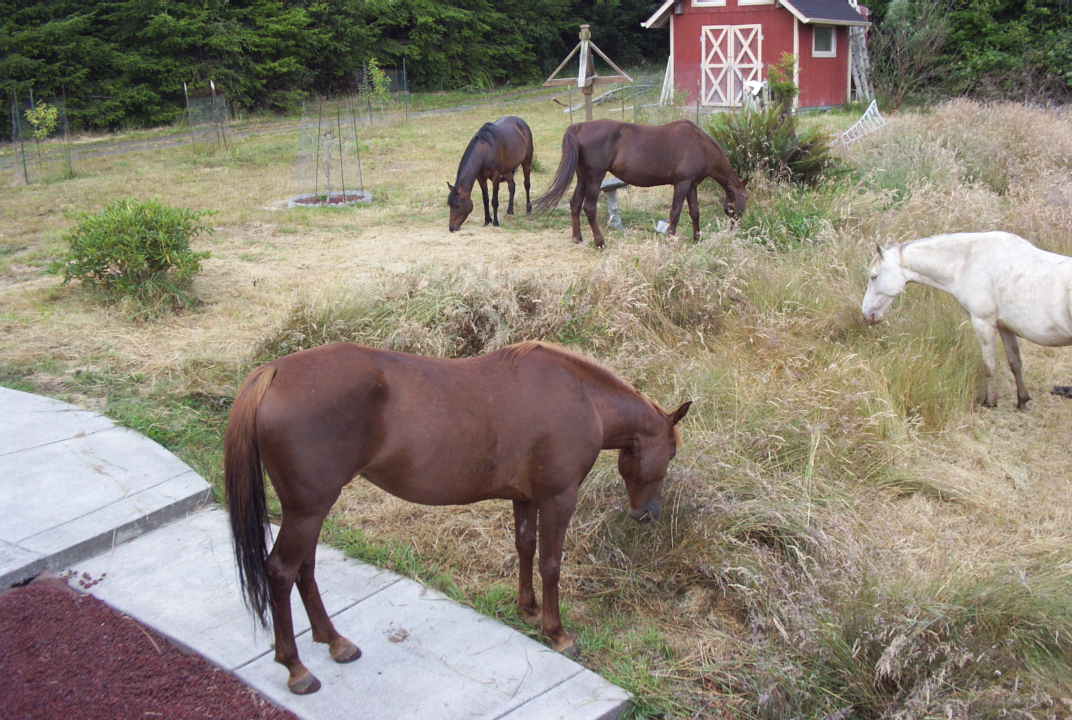
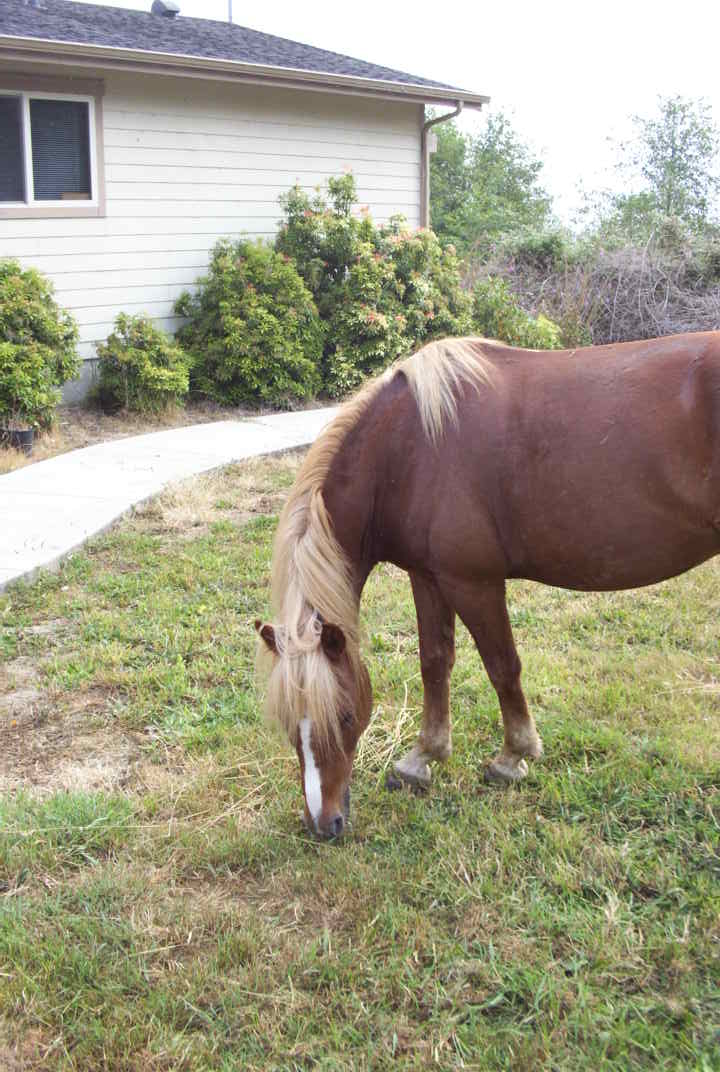
A neighbor's horses compete for attention with the birds.

Friday, August 20, 2010

Question on Egg Laying & More on Recognizing Sex of Birds

A Rosy & a Normal Bourke. Both are males.
Kim writes that she recently adopted three Bourkes, a Rosy and two Normals. The Rosy was supposed to be male, but has laid four eggs. Kim threw out the first three, but now the hen is sitting on the fourth egg. She’s concerned for its health and isn’t interested in raising more birds. She had several questions, addressed below.

A male Normal Bourke. See blue above cere.
I feel sorry for your little hen if she's trying to sit on an egg on the floor of her cage... She must be desperate to raise something. Is one of the other birds feeding her? Males feed females they consider their mate, even if they don't breed. Typically it’s a nest box that triggers egg laying, but I had one hen that used a seed cup. I quickly gave her a nest box and she moved into it. If one of your other birds isn't feeding her, you may only have three hens. Or, perhaps the other two consider themselves to be mated and she's the 3rd bird out... It should be apparent that you have a pair if one is feeding another. Bachelor males will sometimes try to feed another male, but hens don’t normally feed one another.

Since you've searched and been unable to find Bourkes in the past, you might consider allowing these to breed and offer the youngsters to a local pet shop. There might be others who'd like to have them and it would generate some income for you, which would help cover the expense of the birds. You say you’re concerned that they might be related. Although it's preferable not to allow birds to mate with a parent or sibling, it's not as disagreeable as it is for mammals. It's a risk worth taking if you want to.

Colors are brighter on male Normal Bourkes.
A Splendid is behind him.
Be sure your birds have cuttlebone and mineral block to insure they get enough calcium. If she's laying eggs, she needs it more than ever. Oyster shell and grit are good too. She might continue to lay a number of eggs if you keep removing them. By allowing her to sit on the fourth egg, she will probably not lay more right away. That's better for her (unless you decide to offer a nest box and let her raise a family).

To discourage egg laying, provide less light. As we move into fall and winter, keep them in a room where the lights go off as the sun goes down. Farmers stimulate their laying hens to keep producing eggs by extending their day length with artificial lighting. Leaving the lights on in the evening will similarly affect your Bourkes. You asked about removing a male, and I wouldn't recommend it for preventing egg laying...it's not likely to have that effect and will leave one of your three birds very lonely.

Sexing your Normals should be an easy thing. As I've mentioned in previous posts, Normal males have a tiny row of blue feathers over their cere (nostrils)...females don't. A very young male will develop it around 6 months of age or so. A male’s pink chest and the blue on his shoulders also tend to be brighter than a female's. It’s hard to recognize, however, except when you have them together and compare them.

Good Luck! I hope you have a male ... their songs & wolf whistles are lovely. Enjoy your sweet birds.

Tuesday, August 10, 2010

Breakfast for Bourke's

The month of August is very full for us as three of our six grandchildren will be visiting all month.

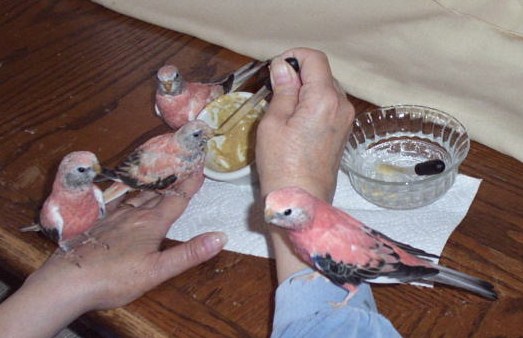
This photo was taken by my 15-year-old grandson, Matthew, who was willing to take the picture for me. Although, perhaps in typical teen-age male behavior, he refuses to have his own photo taken. Smile.

I'm feeding a baby Bourke and our young adult, tame Bourkes are helping themselves to some Exact Hand Feeding formula too. It's a bit of a treat for them. They don't eat much of it, but they always want a taste or two. It seems to help keep them engaged with me vs. flying around and pestering our other birds...those who aren't allowed out for free flying. I'd have to get a net to catch the others, and frankly, there are too many and nets upset all of them.

Currently, I have five who enjoy free flying with me each morning. The cats and dog go outside and then the birds fly freely for a little while. Fortunately, they are usually willing to return to their cages when I want them to.

Bourkes are very sweet-natured birds and typically quieter than most.

Kaytee Exact Hand Feeding Program for Birds  I haven't seen this video, but found it offered at Amazon.com for anyone who is interested. 
May the rest of your summer be blessed and your birds remain healthy and happy!

Original Background is Back!

Took a bit of fussing, but finally found and returned to my original background in Blogger. The hummingbird background was nice, but it kept getting darker and brighter as you moved down the blog. I found that distracting. This one is softer and I like it better. Hope you do too.

Sunday, August 8, 2010

Tame Bourke Parakeets and their Differences

Flame in back, Rosie in front. My favorite birds.

This is a photo of my two favorite Bourke parakeets. At present, I have 22 Bourkes and six Splendids.

Actually, these two are brother and sister, although they came from different clutches. Rosie's parents put their youngsters at risk (discussed earlier), so her clutch of four was pulled and handfed very early on. Rosie, in front, grew up with three wonderful siblings and it was difficult to decide which one to keep and which of them to sell. I wanted to keep them all. She was selected because even at a very early age, she always flew to me directly from the cage, or from anywhere else when I called her. That helped me decide to keep her.

Baby Bourkes ready to sell.
I expected to hand feed an unrelated baby and try to match "him" up with her. However, in a later clutch from her parents, one began to feather in a deep rose color. Darker than any of my other birds, I decided to keep him and named him Flame. Now, I have the dilemma of choosing mates for each of them! Instead of decreasing my flock as I wanted to, I'll be adding to it.

Rosie and Flame help tame other babies as they fledge. The wonderful thing about Rosie and Flame is that whenever they come out to fly ... just about every morning ... when it's time to go back in their cage, they go without any trouble. Not so, with many of the babies who often resist going home to a cage and would rather keep flying about the room. Hence, I'm very fond of Rosie and Flame because they are so willing to do whatever I ask of them.  

No matter how many tame youngsters I have out at a time, Rosie is the one who always chooses to stay with me. She gives kisses, let's me kiss her back and stays with me most of the time. She's very affectionate. On the other hand, Flame will sit on my shoulder, but doesn't interact as much. She's curious and investigates anything I'm doing.

We visited North Bend, Oregon's new Boardwalk yesterday. The photos below are taken there. Happy Sunday everyone and God bless you.


Taken from North Bend, Oregon Boardwalk.

Friday, August 6, 2010

Viewer-ship Passes 2,000! And a shameless promotion for my new Blog.

UPDATE on Sept. 10, 2011 ... Had 40,000 more views over the past year. We are now at 42,000 views. Amazing. Click "HOME" button above to view recent posts.

As of today, this site has been viewed over 2,000 times. Two Thousand and Eleven views since Dec. 11, 2009. It's great to know there are so many people interested in Exotic Birds.

To see where the views came from, click on "Visitors to this Site," to the right. You'll have to use the back button to return to us.

This blog is NOT going away. I love sharing information about my little feathered friends. However, I am wandering afield with this post. Here's why ...

Since my husband is a novelist, I recently started "Summit Book Reviews" to promote books (not only his). As an avid reader, I look forward to that.  I know there are many readers out there who love good entertaining books, and I look forward to seeing Summit Book Reviews quickly increase in popularity.

If you like to read, Summit Book Reviews is well worth a look. Please help raise the readership! Smile. See if you can spot your red dot on "Visitors to this site." It's only updated once every 24 hours, so you'll need to return to check it out.  There aren't many dots there yet (hey, it's brand new!), so it should be easy to recognize yours. Not as easy on this blog, however, but go ahead and try...just remember to use the back button to return. 

THANK YOU! Here is a link to Summit Book Reviews:

Friday Update, Visiting Horses and Grandchildren

It's been a busy week. Woke up one morning to seven horses grazing around our house. I called the owner who showed up about an hour later, after he'd repaired the damaged fence that let them escape.

They were very friendly horses, but did leave too many droppings, munched or trampled decorative plants, tromped on sprinkler heads that my husband will have to repair (I haven't pointed them out to him yet). All in all, I'd rather they'd stayed home.

Our grandson is with us. He's fifteen. Unfortunately, the horses visited before he did. Maybe he'd have had more interest in them than in my tame Bourkes? I expected that he'd enjoy the birds...should never have expectations (especially of other people) and you won't be disappointed. Smile. So, no photos of him with the birds...at least not yet. He finds most things boring.

After the middle of the month we will have two granddaughters visiting. One of them is a bird lover like her grandmother...me. I look forward to her fresh, young attitude. She's still only seven and interested in everything her grandparents have to offer. Give her a few years and that may change.

As soon as the swallows outside my laundry room window were fledged, the whole bunch of them disappeared. Rather abruptly. I wonder if it's because we've had one of the coldest summers I've ever experienced in Oregon. Must be that global warming they've spent so much time talking about.

In the 1970's we were being warned about an imminent ice age. Never take any of it seriously, especially since many scientists in the know have debunked the global warming claims. But, our mainstream media refuses to hear them. The liberal mainstream media has its own agenda.

Our 12-year-old granddaughter tells me that in school they are being taught to say, "global change," and not global warming any longer. Guess they don't like having egg on their faces. Anyway, I believe the swallows flew south early this year because it's cold here. Most days it doesn't make it to 70 degrees, although we've had maybe two or three very warm days on the coast all summer. Europe had a year without a summer in it's history. This feels like ours. Not that I'm complaining...I like cloudy, cool days. Easier to put on a jacket than cool down when it's really warm.

Our grandson came from Texas and said it was 106 degrees there when he left. I'm glad we're in Oregon. I wonder if it's the weather that makes him want to visit us rather than that Grandma & Grandpa are interesting and fun...? Need to get him out of the house and busy doing something, but can't today. I'm attending a retirement luncheon for a friend. Tomorrow is committed too. He seems happiest playing video games. Is every young person today addicted to video games? Sure seems like it.

Until next time...I hope I'll have news about the birds. No eggs or babies at the moment.

Peace & Blessings.

Sunday, August 1, 2010

Splendid Results Not So Splendid...

Jewel, a Splendid hen, does a good job covering her five eggs.
Checked the nest boxes of the two Splendid hens. It appears that one has infertile eggs. I didn't disturb the other hen, and there should be signs of hatching, but nothing...no broken shells, so probably no babies for her either.  These two Splendid hens are very flighty, so I tend to leave them mostly alone. The males are friendlier.

I've had much better success with the Bourkes, and many of the Bourke hens are so used to me that I can lift them off their eggs and settle them back down without any fuss from them. Can't do that with these two Splendid hens.

Dad is Rainbow Junior, son of Rainbow Sr.
Wish I had a happier update about the Splendids. They've been given special diet aides and everything possible, even switched mates. Each pair accepted the other spouse. Males have been feeding hens and they've appeared to try to mate. But in the end, their mating attempts appear to have been a non-contact sport.  

Splendid Reflections: 40 Years of Grass Parrakeet Husbandry  Amazon.com link for a book by Alec Mizen

Friday, July 30, 2010

Added Tab on Ancient Aviculture Above

The article on Ancient Aviculture is so interesting that I added a tab above where new viewers have a better chance of finding and seeing it. The photos of ancient dovecotes are amazing.

Wednesday, July 28, 2010

BOURKES, COCKATIELS & EGG LAYING

Chloe asked, "I have a female pet cockatiel. She's going on 6 years old, and has not yet demonstrated any wish to lay eggs (although she has not had a mate). I do not wish her to start laying eggs - even though they'd be infertile - as I am worried about egg-binding, and other health issues.

This weekend, I will be bringing home a young male Rosey Bourke's. I've read from your posts that they will feed any female Bourke's or Splendid - sometimes even a less dominant male, and I was wondering if they would try that with a different species, as well (ie. my cockatiel)?

Should I be worried about him triggering her motherly instincts? Also, will he become protective of her, and become aggressive to me?"

Chloe, My experience is it's unlikely that a Bourke or Cockatiel hen will lay eggs if they don't have a nest box or similar "safe" place to hide in. Even when a male is present, they need that nest box. My first tame pair of cockatiels were in a large 3-sided cage that fit against a corner wall. When they started chewing a hole into the wall, I was annoyed and didn't realize at the time that they were attempting to carve out a nesting area. The hole got quite big, but before they could use it, they were removed and the whole wall covered with mahogany siding. (If the room's siding is ever removed, someone will wonder how that big hole got there).
 
As long as my pair didn't have a nest box (over a decade), the hen never laid an egg and no mating occurred.
 
With that same pair, I also had a tame blue budgie who was allowed out of his cage when the cockatiels were. He did all sorts of mating display behaviors in front of the cockatiel hen, but she ignored him. He was smitten with her, but she cared only for the male cockatiel... Who, by the way, never seemed to be bothered by the budgie's wooing behaviors. None of the three birds ever became aggressive to each other or to people. When a budgie hen was eventually provided, all four birds got along splendidly.
 
Although Budgies will attempt to breed with another species, Bourke's have never been known to do so. For this, and other reasons, they've recently been classified in a genus all their own, no longer with other Neophema's. It is unlikely that your male Bourke will attempt to feed your cockatiel. Hopefully, however, they will form a friendship of some kind.
 
There is no need to worry about him "triggering her motherly instincts," as it's her eggs that would do that. Also, having a hen around has never made any of my male Bourke's aggressive to me or anyone else. Their only aggression might be toward another male trying to steal their mate, but even then I've never seen them hurt each other (although for Splendid breeders, I have seen male Splendids draw blood on another male, and need to be separated). Bourkes tend to be very mellow, sweet birds.
 
Hope this helps. Good luck introducing your new friend to your older one. I wouldn't expect any problems.

Tuesday, July 27, 2010

Added "Question" to Labels

Each of my posts has labels listed below. If you choose one (a topic) and click on it, you will get all the posts related to that topic. I just added "Question" to the labels. To read the questions and answers from other readers, you can click on it and all of them will be brought up. Be sure to read any comments below each post too. Similarly, if you have questions about sexing your birds, you can choose that link, or any other of interest to you. Thanks!

Question on Personalities - Male or Female?

Marie asked: "My female 12-yr-old Rosy Bourke died yesterday. I have 1 one-yr-old female. Now should I get another female or a male?"

You have our sympathy. It's possible to become quite attached to our pets and Bourkes can be very sweet and interactive.

The obvious question would be, "Do you want to raise baby Bourkes?" I assume not, or you wouldn't be asking which sex is best...you'd already know you want a male. 

As a woman, even if sexual relations were not an issue, I'd rather live with my husband than my very best female friend. Your Rosy is probably no different. A female companion is better than none, but a male...well, he's going to mean a lot more to her.

If you don't provide a nest box, your pair will probably not breed. Nest boxes stimulate the urge to raise young. However, I had one experienced mother hen who didn't wait for me to return her nest box during the breeding season and laid an egg in her seed cup. This is unusual, however, and even less likely with a bird that's never raised young before.

Even though a pair without a nest box probably won't breed, the male will likely feed her. This is a bonding activity, similar perhaps to human kissing. It also proves he can be a competent father. Male Bourkes feed the hen while she's brooding and raising chicks. They later take over feeding the offspring when the young leave the nest and he helps them learn to feed themselves.

A happy pair of Bourkes will sit together much of the time and the male will offer to feed the hen occasionally. Male Bourkes are also lovely singers. They naturally wolf whistle (softly) and their songs are longer. They spend more time singing than hens do. They're also more active because of their courtship behaviors.

My recommendation is that a male will offer you (and your hen) more entertainment than will another female. Too bad you don't live in Oregon. I have two young male Rosy Bourkes available who are hand fed and very tame.

Best of luck and God Bless you and all your pets, four-legged or winged.
Smile.

Saturday, July 24, 2010

Personality Differences in Bourkes, Splendids and Budgies

As I played with my tame young Bourkes this morning, it struck me how different they are from other varieties of parakeet. I held a baby Bourke out for my husband to see and he instinctively reached over to pet it on the head.

“They don’t like that,” I said.

“Yes, I’ve noticed. They’re very different from the budgies, aren’t they?” he replied.

It’s true, Bourkes and Splendids are approximately the size of the common Budgerigar parakeet, but their personalities differ widely. Budgies and cockatiels like to have their heads scratched. Bourkes do not.
BOURKES: Although they sing, Bourkes are typically quieter than a budgie and less active during the day. They are happiest, most active and sing more often at dawn and dusk, napping a lot throughout the day, especially in the afternoon.

As pets, some Bourkes will nibble at you, offering kisses. They like to ride around on an owner and can be trained to prefer a shoulder to the top of your head. Some will even come to you when called, and bathe in a stream of water running into your hand. But, they are less likely to do either than a budgie. As a rule, they are more reserved and careful. A positive in their favor is that they don’t chew on everything in sight like a budgie will. If you line their cages with paper, some will chew on it and others won’t. However, those who chew it do so a lot less enthusiastically than other varieties of parakeet (so they’re less messy). I’ve read, but can’t confirm, that in a planted aviary, Bourkes leave the plants alone. Mine love greens such as lettuce and kale, so I keep house plants away from their cages to be safe.

SPLENDIDS: I’ve called these little birds clowns in the past and I still think of them that way. Not only are they brightly colored like clowns, they act the part. Splendids love toys and bright objects, especially mirrors. In the wild they feed on the ground and will spend a lot of time on the bottom of a cage or aviary floor. As for lining their cages with paper … expect it to be shredded regularly. They like to chew. And bathing is a must for them. They like taking baths and, unlike Bourkes, tame birds will easily bathe in your hand if you encourage it. Water is their element and water cups will quickly be filled with anything they can find to put in it. Hence, their water needs to be changed more often than any other bird species I’ve ever owned. They make soup of their water, placing veggies, paper, seed shells, whatever they can into it.

Splendids are more active than other parakeets. They do a lot of pacing when in their cage and probably are happiest in an aviary or, when tame, being allowed to fly about the room. Individual birds can be very interactive with their owners. However, if not tame, they tend toward being easily frightened. I keep a night light on in the room with Splendids after dark to protect them from crashing into the sides of their cages if something suddenly scares them.

BUDGERIGARS: Active and intelligent, the only drawback to a tame budgie is that they chew and can be noisy. Otherwise, they’re confident little guys who make great pets and are very interactive. They learn to repeat human words that owners can understand when no one else does. Clearly, they do not repeat as well as a parrot, but they try. They come in almost every color of the rainbow, except red or pink. Those colors are reserved for Splendids and Bourkes. Another plus in their favor is that their droppings are typically drier and more concise than other birds’. That might offset their tendency to shred paper and anything else within their grasp.

NEOPHEMA’S: There are many varieties of Neophema Parakeets and I’ve not experienced others, although I’d like to get to know Turquoisines better. Their colors are gorgeous and I hear they are a fun bird to keep. Perhaps someday I’ll find a breeder willing to accept a pair of Bourkes in trade for a pair of “Turqs.” Other Neophema varieties include: Neophema chrysogater, chrysostoma, elegans, elegans carteri, elegans petrophila and pulchella.

Parrakeets of the World  - The photo above was taken from this book. Here is a link for it at Amazon.com

Wednesday, July 21, 2010

Trouble with Blog Layouts

After wasting time fussing with broken links in this blog, it turns out that our broken links were caused by the previous layout. Switching layouts to the tan shade with the birds in the upper right corner that I liked was not a good idea. All links to other sites didn't work in Explorer. Oddly, they worked through the Firefox browser, so I blamed the Explorer browser, but when I changed to another layout, they work in both.

This is the third layout (I wasn't able to retrieve the very first one), the links work again! Ta dah! Hope you like this choice. It's still bird-ish ... Smile.

Now that the links are working again, I hope you'll take a look at my husband's novels through Cape Arago Press, or visit his blog: "Sowing the Seeds of Christianity" about its historical past. The books are fascinating, historically accurate novels about First Century Judea. The blog has amazing information. Check them out! Their links are in the left column.

Meanwhile ...


We have four birds on eggs, two Splendid hens and two Bourkes! Here are photos of each of the four. Other Bourke hens are poking around in their nestboxes, so hopefully we'll have more babies before the summer is over. So far, no Splendid eggs have been fertile ... maybe the third time will be the charm for these two. Smile.

God bless you and your love for birds!

Monday, July 19, 2010

Cats, Baby Swallows & Wild Mama Birds

We have three indoor/outdoor cats. As I've posted before, they know to leave our birds alone and also realize that they are expected to never threaten birds outside either. 

As baby swallows were growing up in the bird house outside our back door, their parents flitted back and forth ignoring the cats. Not so today! 

Fortunately, I saw them dive down to target our calico. As one swept down at her for the 3rd time she raised a paw in its direction and I shouted, "No!"
She crouched down and looked at me. As I walked over to her, I told her it was okay, that I understood. I lifted her and took her into the house. Much to their dismay, the other two cats were also relegated to be house-bound for the day. 

The young swallows are about to fly the coop, so to speak, and their parents are suddenly aware of the danger cats present. It's one thing to have cats around when your nestlings are snuggled safely in a secure box, but something else entirely when they are about to take their first flight.

Mei-Ling, our sleek black cat, isn't happy about spending all day indoors.

Something to watch for:  I'm starting another blog and currently setting it up. As soon as it looks the way it should (I'm close to having it ready), I'll post the link here. I'm an avid reader and writer, so a book review site seemed a logical step. I'm the moderator plus three reviewers at present, with more reviewers and more books to come. Smile. Actually, I started this bird blog as practice for a blog about writing, but this has become a joy to do! 

Aren't birds wonderful!?

Sunday, July 18, 2010

Swallows

Our baby swallows are still in the boxes outside my back porch. I love hearing them chirp. There are several in each box. This morning as I watched, I noticed that the parents not only carry food into their young, they also carry out droppings. They do all they can to keep the nest clean. Isn't that wonderful? 

These babies are fully feathered and nearly ready to vacate the nest. So, at full-size it has to be more work to keep the nest clean. Bigger birds, bigger droppings. It's no wonder parent birds begin to lose weight as their youngsters continue to grow.

The bird at right is a baby sticking his head outside the nest box. I tried to get a photo of his parents feeding him, but my camera isn't as fast as a flying swallow. 
We have bird seed feeders for other birds, but offer nothing but bird houses for the swallows. I'm thinking it might be nice to raise meal worms again and offer them to the swallows when they return next year. I used to grow meal worms in a large enclosed canister full of corn meal. The worms pupated and became beetles that reproduced and I always had a ready supply of live food for the finches I was raising. Haven't raised meal worms for many, many years, but it is tempting to do so. Then again, swallows do such a good job of ridding us of mosquitoes, do I want to feed them something else?

If you want to raise meal worms too, below are a couple of sites that give directions. Keep in mind, that I did well with one big container for everything. Just reached in to scoop around for the worms when I wanted them to feed the birds. They were always plentiful. I left the beetle and pupaes alone. The eggs were virtually invisible in the corn meal.

http://mealwormstore.com/raising_mealworms.php

http://www.efinch.com/mealworms/mealworm.htm

Tuesday, July 13, 2010

Hand Carved Egg Shells ... Lovely!

As promised, here are photos of Dixie Doris Bowman's beautiful hand carved egg shells. The Emu eggs were done by her daughter, Jennifer Sperling. 

There are shells from:  Ostriches; Emu's; Bob white quail; Pheasants; Tinamou's from both Argentina and Chile; Guinea fowl; Geese; Pigeons; Turkeys; Chickens, both Aracauna and Rhode Island Reds; and even diminutive Cockatiel eggs. 

I've given her Bourke & Splendid parakeet eggs, but have yet to see one carved. She tells me that the emptied shells have to dry out for a very long while before they're ready. Also, the shells have to be substantial enough to hold up to carving. My hens get plenty of calcium, so hopefully their eggs are strong enough. In case you're worried, I only provided infertile eggs.  


These beautiful works of art are for sale. If you're interested, you can contact Dixie Doris Bowman at 541-756-4998. She is located in Southern Oregon, USA.


As you can tell by this sign, a robbery occurred and many items were stolen. If you see any of these one-of-a-kind items, please let Mrs. Bowman know.  Thanks!